How I make product decisions
Working as a solo startup designer taught me how to move fast with imperfect information. While a lot of design focuses purely on visual output, I don't just push pixels. I see design as deep problem-solving: focusing on reducing risk, shipping functional products, and keeping the team aligned.
Here is what that looks like in practice:
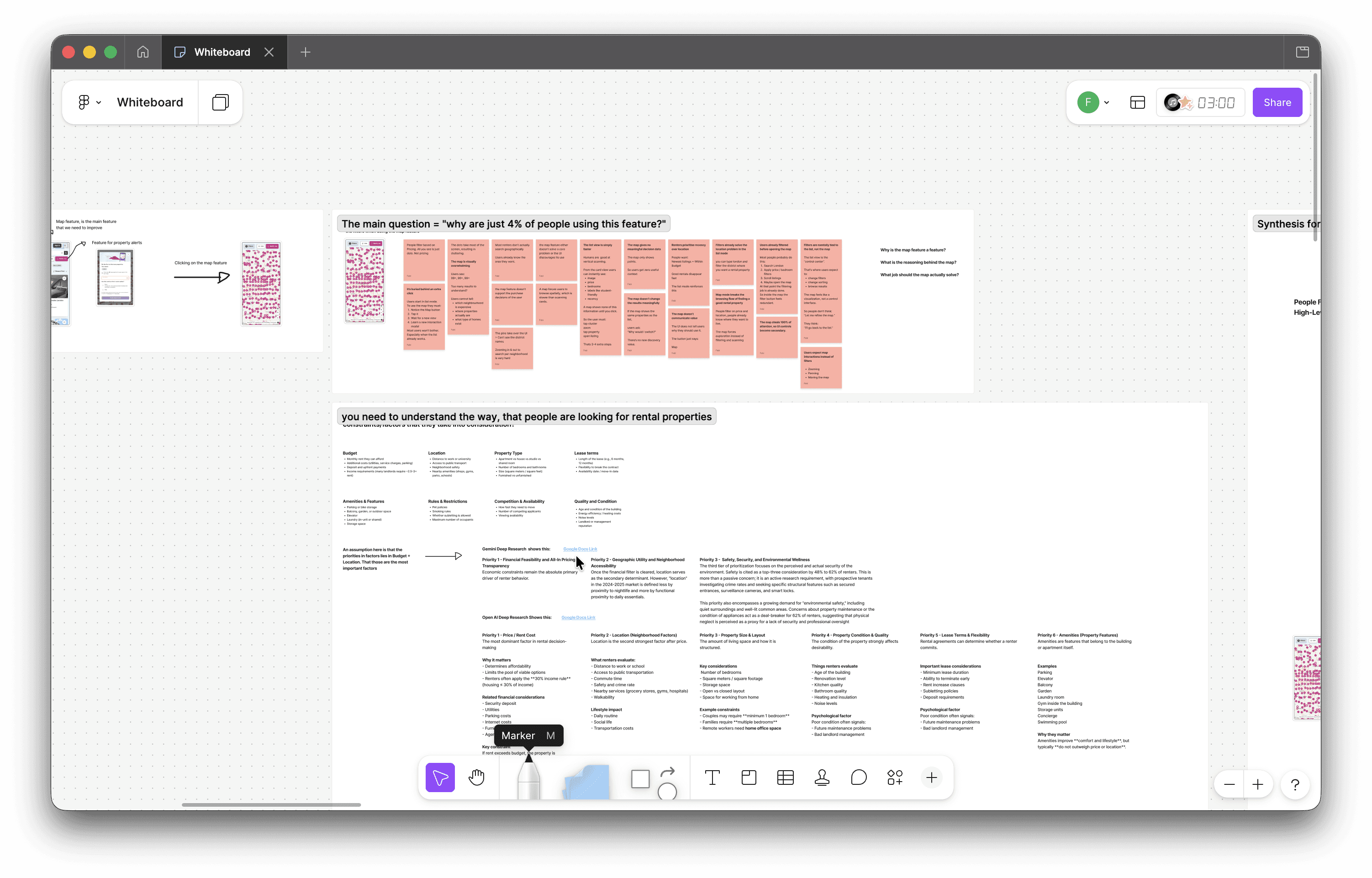
1) Reduce uncertainty early (Whiteboards over polished UI)
I’d rather learn early than polish the wrong direction. Before I open Figma, I clarify assumptions and simplify the core question.
The reality:
When a new map feature saw only a 4% click rate, alongside total user confusion from those who actually did click, I avoided jumping straight into Figma to make it look better. I used a whiteboard to map out the user psychology, edge cases, and the biggest product risks. I needed to diagnose why users were ignoring it and where the flow broke down before committing to any visual details.
2) Design for the build (No isolated features)
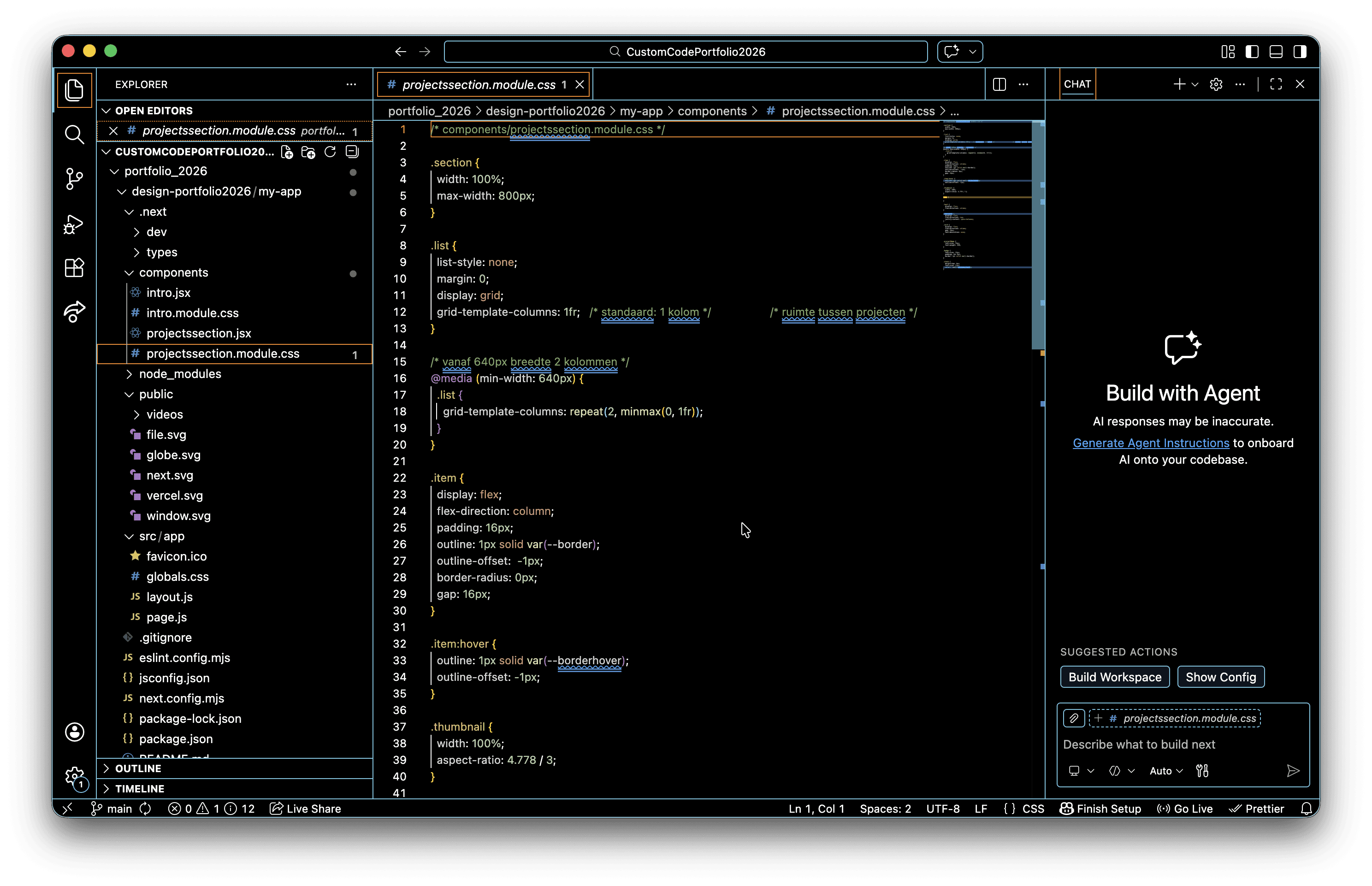
Product decisions need to make sense within the technical reality of the engineering team. I don’t see design as separate from delivery.
The reality: I regularly jump into the frontend code to test feasibility. Because I understand CSS Grid, breakpoints, and component logic, I design clearer, technically sound solutions that don't become a nightmare to implement for developers.
3) Move decisions forward together
Product decisions die in isolation. While formal presentations are essential for final alignment, I don't wait for them to start gathering feedback.
The reality: I align with developers and internal stakeholders from day one. Instead of designing a polished "final" version in a silo and hoping for approval, I share rough concepts early. For me, collaboration isn't just about collecting opinions at the end; it’s about building a shared understanding early on to ensure those final presentations hit the mark and we avoid expensive rework.
Product Designer focused on usable, feasible products
Designing with implementation in mind.
Copyright @ 2026 Christiaan Sanmoekmin. This site is built with Framer. Icons by Lucide